
ICALP
The 53rd EATCS International Colloquium on Automata, Languages, and Programming (ICALP) will take place between 7–10 July, 2026.
ICALP is the main conference and annual meeting of the European Association for Theoretical Computer Science (EATCS). As usual, the conference will be preceded by a series of workshops, which will take place on 6 July 2026.
The Call for Papers can be found here. The Call for Workshops can be found here.
Invited Speakers
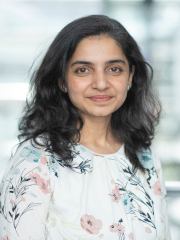
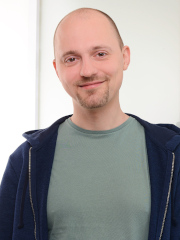
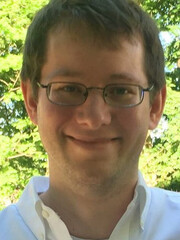
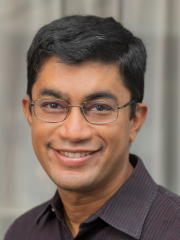
Important dates and information
- Abstract Registration Deadline: 3 February 2026 (AoE)
- Submission Deadline: 6 February 2026 (AoE)
- Track B rebuttal period: 21–24 March 2026 (For Track A: Authors will be contacted only if there are correctness issues)
- Author notification: 20 April 2026
- Camera-ready Deadline: 11 May 2026
- Conference: 7–10 July 2026 (Workshops on July 6)
Workshops
The following workshops will be held prior to the main conference.
- Parameterized Approximation Algorithms Workshop (PAAW)
- INFINITY 2026: 24th International Workshop on Verification of Infinite-State Systems
- Algorithmic Aspects of Temporal Graphs IX
- Quantum Constraint Satisfaction Problems
Accepted Papers
The list of accepted papers can be found here
Proceedings
ICALP proceedings are published in the Leibniz International Proceedings in Informatics (LIPIcs) series. This is a series of high-quality conference proceedings across all fields in informatics established in cooperation with Schloss Dagstuhl – Leibniz Center for Informatics. LIPIcs volumes are published according to the principle of Open Access, i.e., they are available online and free of charge. The accepted papers will need to comply with the LIPIcs style.
Awards
During the conference, the following awards will be delivered:
- EATCS award
- Presburger award
- Gödel prize
- Alonzo Church award
- EATCS distinguished dissertation award
- Best Paper (Track A)
- Canonical Labelling of Random Regular Graphs
Mikhail Isaev (UNSW Sydney), Tamás Makai (University of Munich), Brendan McKay (Australian National University), Paweł Prałat (Toronto Metropolitan University), Jane Tan (University of Oxford), Maksim Zhukovskii (The University of Sheffield)
- Canonical Labelling of Random Regular Graphs
- Best Paper (Track B)
- Optimal lower bounds for Symmetric Modular Circuits
Benedikt Pago (University of Cambridge)
- Optimal lower bounds for Symmetric Modular Circuits
- Best Student Paper (Track A)
- Recursive Jump Operators and Optimal Proof Systems
Fabian Egidy (University of Würzburg)
- Recursive Jump Operators and Optimal Proof Systems
- Best Student Paper (Track B)
- Deciding DFA-Primality is NP-Hard
Daniel Alexander Spenner (TU Dortmund)
- Deciding DFA-Primality is NP-Hard
- Outstanding External Reviewers (Track A only)
- Arpon Basu (Princeton University)
- Jonas Ellert (CWI, Amsterdam)
- Pierre-Etienne Meunier (Coturnix)
- Jakob Greilhuber (CISPA Helmholtz Center for Information Security)
- Meike Neuwohner (CNRS and ENS, Paris)
- Noah Singer (Carnegie Mellon University)
- Helia Yazdanyar (University of Waterloo)
- Outstanding PC Member (Track B only)
- Mahsa Shirmohamaddi (CNRS IRIF)
Program Committee
Track A
- Danupon Nanongkai (Track co-chair), Max-Planck Institute for Informatics, Germany
- Sayan Bhattacharya (Track co-chair), University of Warwick, UK
- Aaron Bernstein, New York University, USA
- Alantha Newman, CNRS, France
- Alex B. Grilo, CNRS, France
- Alexandra Lassota, TU Eindhoven, Netherlands
- Alkida Balliu, Gran Sasso Science Institute, Italy
- Amey Bhangle, University of California, Riverside, USA
- Ami Paz, CNRS, France
- Andreas Galanis, University of Oxford, UK
- Andrei Bulatov, Simon Fraser University, Canada
- Anupam Gupta, New York University, USA
- Arindam Khan, Indian Institute of Science, India
- Ce Jin, University of California, Berkeley, USA
- Chien-Chung Huang, École Normale Supérieure, France
- Christian Coester, University of Oxford, UK
- Dániel Marx, CISPA, Germany
- David Wajc, Technion, Israel
- Ely Porat, Bar-Ilan University, Israel
- Eunjin Oh, Pohang University of Science and Technology, South Korea
- Eunjung Kim, Korea Advanced Institute of Science & Technology, South Korea
- Evi Micha, University of Southern California, USA
- François Le Gall, Nagoya University, Japan
- Gramoz Goranci, University of Vienna, Austria
- Guy Even, Max Planck Institute for Informatics, Germany and Tel Aviv University, Israel
- Hanlin Ren, Institute for Advanced Study, Princeton, USA
- Ian Mertz, Charles University, Czech Republic
- Igor Oliveira, University of Warwick, UK
- Ilias Zadik, Yale University, USA
- Ioana Bercea, KTH Royal Institute of Technology, Sweden
- Jakub Opršal, University of Birmingham, UK
- Jan van den Brand, Georgia Tech, USA
- Jeremy Fineman, Georgetown University, USA
- Jesper Nederlof, Utrecht University, Netherlands
- Joachim Spoerhase, University of Liverpool, UK
- Joshua Grochow, University of Colorado, Boulder, USA
- Jukka Suomela, Aalto University, Finland
- Kangning Wang, Rutgers University, USA
- Karol Węgrzycki, Max Planck Institute for Informatics, Germany
- Kevin Tian, University of Texas, Austin, USA
- Lars Rohwedder, University of Southern Denmark, Denmark
- Lin Bingkai, Nanjing University, China
- Maike Buchin, Ruhr University Bochum, Germany
- Marcin Pilipczuk, University of Warsaw, Poland
- Meirav Zehavi, Ben Gurion University, Israel
- Michał Pilipczuk, University of Warsaw, Poland
- Mikkel Abrahamsen, University of Copenhagen, Denmark
- Nicole Megow, University of Bremen, Germany
- Or Meir, University of Sheffield, UK and University of Haifa, Israel
- Pan Peng, University of Science and Technology of China, China
- Parinya Chalermsook, University of Sheffield, UK
- Paweł Gawrychowski, University of Wrocław, Poland
- Philip Wellnitz, National Institute of Informatics, Japan
- Piyush Srivastava, TIFR, Mumbai, India
- Pritish Kamath, Google Research, USA
- Radu Curticapean, University of Regensburg, Germany and IT University of Copenhagen, Denmark
- Rafael Oliveira, University of Waterloo, Canada
- Rebecca Reiffenhäuser, University of Amsterdam, Netherlands
- Robert Robere, Mcgill University, Canada
- Sagnik Mukhopadhyay, University of Birmingham, UK
- Sahil Singla, Georgia Tech, USA
- Sándor Kisfaludi-Bak, Aalto University, Finland
- Santhoshini Velusamy, University of Waterloo, Canada
- Seeun William Umboh, The University of Melbourne, Australia
- Sepehr Assadi, University of Waterloo, Canada
- Seth Pettie, University of Michigan, USA
- Shaofeng Jiang, Peking University, China
- Shay Solomon, Tel Aviv University, Israel
- Shi Li, Nanjing University, China
- Shuichi Hirahara, National Institute of Informatics, Japan
- Shunhua Jiang, ETH, Zurich, Switzerland
- Sorrachai Yingchareonthawornchai, ETH, Zurich, Switzerland
- Srikanth Srinivasan, University of Copenhagen, Denmark
- Subhasree Patro, TU Eindhoven, Netherlands
- Sujoy Bhore, IIT Bombay, India
- Talya Eden, Bar-Ilan University, Israel
- Thatchaphol Saranurak, University of Michigan, USA
- Thomas Vidick, EPFL, Switzerland and Weizmann Institute of Science, Israel
- Tom Gur, University of Cambridge, UK
- Tomasz Kociumaka, Max Planck Institute for Informatics, Germany
- Troy Lee, University of Technology Sydney, Australia
- Uma Girish, Columbia University, USA
- Vera Traub, ETH, Zurich, Switzerland
- Will Perkins, Georgia Tech, USA
- William Kuszmaul, Carnegie Mellon University, USA
- Yaonan Jin, Huawei Research, China
- Yuan Su, Microsoft and AWS, USA
- Yuichi Yoshida, National Institute of Informatics, Japan
- Zhengzhong Jin, Northeastern University, USA
- Zhiyi Huang, The University of Hong Kong, China
Track B
- Michael Benedikt (Track chair), University of Oxford, UK
- Achim Blumensath, Masaryk University, Czech Republic
- Alberto Larrauri, University of Zaragoza, Spain
- Antti Kuusisto, University of Tampere, Finland
- Bruno Oliveira, University of Hong Kong, Hong Kong/China
- Christof Löding, RWTH Aachen University, Germany
- Christoph Berkholz, TU Ilmenau, Germany
- Édouard Bonnet, CNRS Lyon, France
- Filip Mazowiecki, University of Warsaw, Poland
- Frits Vaandrager, Radboud University, Netherlands
- Gabriele Puppis, University of Udine, Italy
- Guillermo Perez, University of Antwerp, Belgium
- Hongseok Yang, KAIST, Korea
- Isolde Adler, Universität Bamberg, Germany
- Jakub Gajarský, University of Warsaw, Poland
- Jean Goubault-Larrecq, Universite Paris-Saclay, France
- Kirstin Peters, Augsburg University, Germany
- Laura Ciobanu, Heriot Watt University, UK
- Luca Reggio, University of Milan, Italy
- Mahesh Viswanathan, University of Illinois at Urbana-Champaign, USA
- Mahmoud Abo Khamis, RelationalAI, USA
- Mahsa Shirmohammadi, CNRS & IRIF, France
- Marie Fortin, IRIF, France
- Matthias Lanzinger, TU Wien, Austria
- Nikhil Balaji, IIT Delhi, India
- Nikolas Mählmann, University of Warsaw, Poland
- Richard Mayr, University of Edinburgh, UK
- Ruiwen Dong, University of Oxford, UK
- Shaull Almagor, Technion, Israel
- Silvia Butti, King’s College London, UK
- Stephane Demri, CNRS, ENS Paris-Saclay, France
- Tim Seppelt, IT-University of Copenhagen, Denmark
- Tony Tan, University of Liverpool, UK
- Udi Boker, Reichman University, Israel
- Victor Dalmau, Universitat Pompeu Fabra, Spain